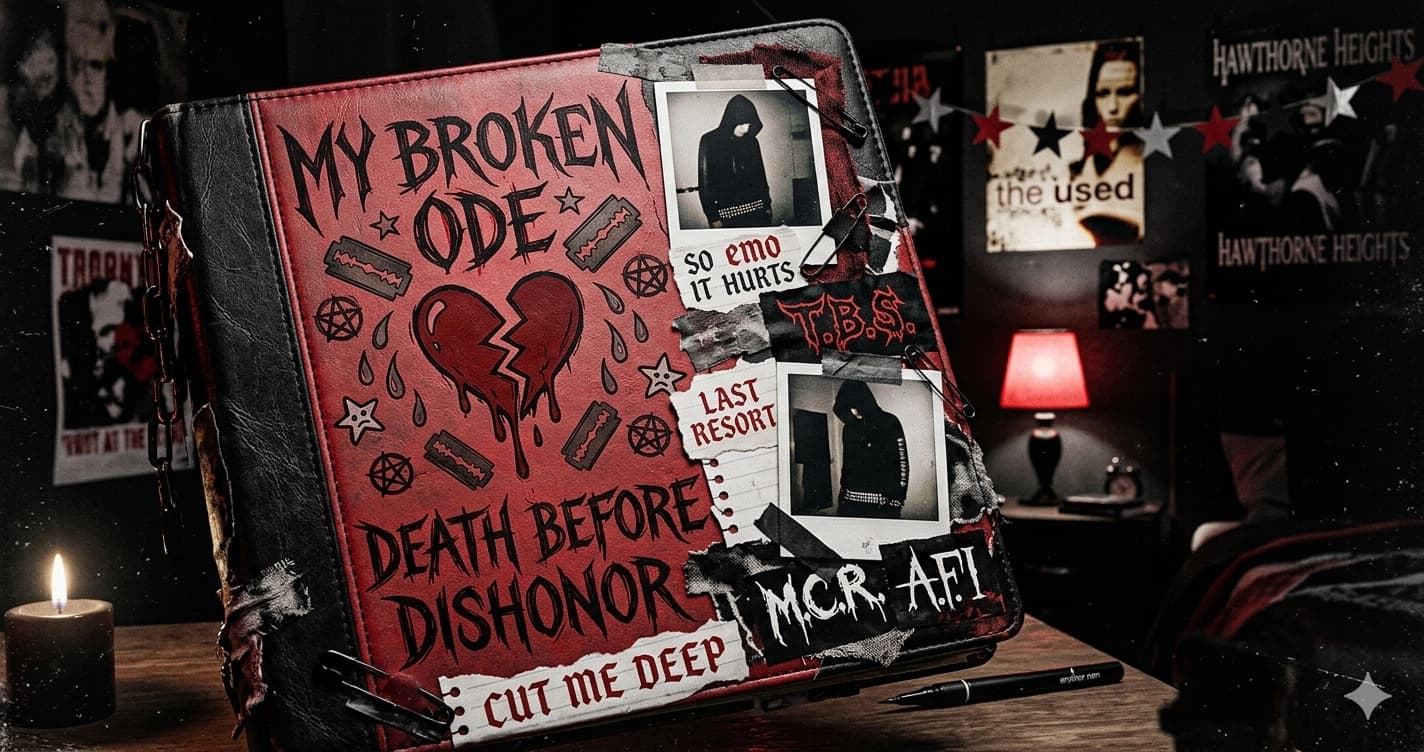
Emo Fonts & Scene Typography — The Complete Unicode Guide
Emo typography is having its moment again. The Gen Z nostalgia cycle has reached the mid-2000s — MySpace layouts, scene hair, heavy eyeliner, and the specific visual language of Hot Topic-era graphic design. On TikTok, Instagram, and Discord, emo and scene aesthetics are being deliberately reconstructed by people who either lived through them or are discovering them for the first time through nostalgia content.
The typography is a core part of that reconstruction. Emo fonts have a specific signature — angular Gothic lettering, broken serifs, heavy weight combined with sharp detail — and those characteristics map directly onto Unicode styles that copy and paste anywhere.
What Makes a Font "Emo"
Emo typography draws from a specific set of influences that converged in the early 2000s:
Gothic/Blackletter — the heaviest influence. Bands like My Chemical Romance, HIM, and Black Veil Brides used modified Fraktur and Gothic letterforms for logos and merchandise. The Gothic aesthetic connotes darkness, weight, and a certain dramatic seriousness.
Distressed and broken type — emo graphic design loved cracked, torn, and imperfect letterforms. In Unicode terms, this maps onto Zalgo/combining diacritics (text that "breaks" with stacked accent characters).
All-lowercase with excessive punctuation — the typographic register of Livejournal, early Tumblr, and AIM away messages. "i'm so broken rn" in a heavy script font with three exclamation points.
Razor-sharp serifs — ultra-condensed, high-contrast letterforms. Not quite Fraktur but in the same extended family of high-drama, high-contrast type.
Scene overlaps with emo but tends brighter — neon colors, star graphics, glitch effects, and the maximalist aesthetic of 2006 Myspace profiles. Scene typography leans slightly more toward decorative and less toward pure Gothic weight.
Unicode Styles for Emo and Scene Aesthetics
Gothic / Fraktur — The Core Emo Style
The heaviest and most direct emo typography. Used for band names, tattoos, merchandise, and the "serious" end of the emo spectrum.
𝔢𝔪𝔬 𝔨𝔦𝔡 · 𝔡𝔞𝔯𝔨 𝔥𝔢𝔞𝔯𝔱 · 𝔟𝔯𝔬𝔨𝔢𝔫 𝔰𝔬𝔲𝔩 𝔅𝔩𝔞𝔠𝔨 𝔓𝔞𝔯𝔞𝔡𝔢 · 𝔖𝔱𝔞𝔯𝔰 𝔬𝔣 𝔅𝔩𝔬𝔬𝔡
Bold Fraktur — Scene-Heavy Version
More visual weight — closer to the merch table aesthetic.
𝖊𝖒𝖔 𝖒𝖔𝖒𝖊𝖓𝖙 · 𝖘𝖈𝖊𝖓𝖊 𝖐𝖎𝖉𝖘 𝕭𝖑𝖆𝖈𝖐 𝖂𝖊𝖊𝖐𝖊𝖓𝖉
Bold Italic — Dramatic Emphasis
Emo used italic for emotional weight. Bold italic Unicode has that urgent, leaning-forward quality.
𝒊'𝒎 𝒐𝒌𝒂𝒚 · 𝒏𝒐𝒕 𝒐𝒌𝒂𝒚 · 𝒅𝒂𝒓𝒌 𝒔𝒊𝒅𝒆
Cursive / Script — Early Emo / Softboy
The lighter end — used for "softer" emo content, emotional posts, the handwritten journal quality.
𝓷𝓸𝓫𝓸𝓭𝔂 𝓾𝓷𝓭𝓮𝓻𝓼𝓽𝓪𝓷𝓭𝓼 · 𝓯𝒆𝓮𝓵𝓲𝓷𝓰𝓼
Zalgo — Broken/Glitch Emo Text
Zalgo combining diacritics create the "corrupted" text effect popular in horror-adjacent emo aesthetics. The text appears to overflow and break — chaos made visible.
T̷͎͔̈́h̸͕̳̀͝i̵̥͗s̵͔̍ ̶͓̏i̷͎͝s̵̪͒ ̷̬͊f̸͉̈́i̴̦̟͑n̷͕̒ȇ̴͖ — Zalgo applied to "This is fine"
Used in horror emo content, copypastas, and dramatic aesthetic posts. See the zalgo guide for full details.
The Emo Era Typography Timeline
2001–2004: Early Emo
My Chemical Romance's I Brought You My Bullets era. Typography was relatively restrained — heavy Gothic lettering for band names, hand-drawn DIY aesthetic for flyers and zines. The Fraktur influence came through clearly: ornate, heavy, European in feel.
The typographic reference points: Victorian mourning stationery, 19th century Gothic revival architecture, penny dreadful paperback covers. Emo borrowed from the same visual tradition that heavy metal had mined a decade earlier — but with more Victorian elegance and less brutality.
2005–2008: Peak Scene
This is the MySpace era. Graphic design became chaotic — star graphics, neon overlays, glitter textures, diagonal layouts. Typography fractured into two directions:
- The hardcore/serious side stayed with Gothic letterforms
- The scene side went brighter and more decorative: star-studded display fonts, gradient fills, outline strokes, 3D effects
Bands like Escape the Fate, Bring Me The Horizon (early era), and Asking Alexandria defined this period visually.
2009–2014: Post-emo / Fall
Emo fell out of mainstream favor. Typography went cleaner — sans-serif, minimal. The movement went underground and emerged as a collection of micro-aesthetics on Tumblr.
2020–2026: The Revival
Gen Z discovered emo through TikTok nostalgia content, and a deliberate aesthetic revival began. Unlike the original, the 2020s revival is self-aware and often ironic — people know they're doing a bit while also genuinely connecting with the aesthetic. The typography reflects this: authentic Gothic lettering is used alongside contemporary aesthetics.
Emo Symbols and Characters
Unicode contains most of the symbols associated with emo aesthetics:
Core emo symbols: 🖤 ✝ ⚰ ☠ 💔 🥀 🔪 ⚡
Stars (scene essential): ★ ☆ ✦ ✧ ✶ ✷ ✸ ⭐ 🌟
Gothic/dark: ⛧ ☽ ☾ 🕸 🕷 🦇 🌑 🌙
Scene-era: ✂ 🎸 🎵 🎶 💿 📼 🖊
Classic emo combo patterns: 🖤 ✝ 🥀 · ★ ☆ 💔 ☆ ★ · ⚰ 🕸 ⚡
Emo Bio Examples — Copy Ready
Classic emo: 𝔡𝔞𝔯𝔨 𝔥𝔢𝔞𝔯𝔱𝔢𝔡 🖤 𝔟𝔯𝔬𝔨𝔢𝔫 𝔰𝔬𝔲𝔩𝔢𝔡 ☠ 𝔟𝔩𝔞𝔠𝔨 𝔭𝔞𝔯𝔞𝔡𝔢 𝔢𝔯𝔞 ✝ 𝔫𝔬𝔱 𝔬𝔨𝔞𝔶
Scene revival: 𝖘𝖈𝖊𝖓𝖊 𝖑𝖎𝖋𝖊𝖘𝖙𝖞𝖑𝖊 ★ 𝖓𝖊𝖛𝖊𝖗 𝖌𝖗𝖊𝖜 𝖚𝖕 🌟 𝖒𝖞𝖘𝖕𝖆𝖈𝖊 𝖊𝖗𝖆 𝖗𝖊𝖘𝖙𝖔𝖗𝖊𝖉 🌟
Soft emo: 𝓷𝓸𝓫𝓸𝓭𝔂 𝓾𝓷𝓭𝓮𝓻𝓼𝓽𝓪𝓷𝓭𝓼 𝓶𝒆 💔 𝒇𝒆𝒆𝒍𝒊𝒏𝒈𝒔 𝒂𝒓𝒆 𝒍𝒊𝒂𝒓𝒔 🥀
Discord Names / Bios
𝔇𝔞𝔯𝔨𝔰𝔬𝔲𝔩 🖤 𝕭𝖑𝖆𝖈𝖐𝖕𝖆𝖗𝖆𝖉𝖊 𝒏𝒐𝒕𝒐𝒌𝒂𝒚𝒌𝒊𝒅
TikTok Display Names
𝔢𝔪𝔬𝔠𝔥𝔦𝔩𝔡 · 𝖘𝖈𝖊𝖓𝖊𝖐𝖎𝖉 · 𝓭𝓪𝓻𝓴𝓼𝓸𝓾𝓵 · 𝒃𝒓𝒐𝒌𝒆𝒏
Scene vs. Emo: Typographic Differences
Scene and emo are related but distinct subcultures with different typographic personalities:
Emo typography:
- Heavier Gothic weight
- More restrained color palette (black, white, deep red)
- Victorian/mourning aesthetic references
- Takes itself seriously
- Font choices: Fraktur, Old English, distressed Gothic
Scene typography:
- More decorative and maximalist
- Neon colors, star graphics, glitter fills
- MySpace profile energy — everything at once
- Slightly more playful, slightly less serious
- Font choices: anything with visual impact — outlined, 3D, gradient
In Unicode terms: emo leans Gothic/Fraktur, scene leans toward bold display styles with symbol embellishment.
The My Chemical Romance Typography Effect
No band shaped emo typography more than My Chemical Romance. Their visual identity across five albums represents a masterclass in subculture-specific type design:
I Brought You My Bullets (2002) — hand-drawn Victorian funeral parlor aesthetic. Ornate, dark, intimate.
Three Cheers for Sweet Revenge (2004) — cleaner but still Gothic. The era that defined the emo mainstream look.
The Black Parade (2006) — the peak. The Black Parade marching band concept introduced more theatrical, circus-influenced type alongside the Gothic core. This album's visual language is still the primary reference when people say "emo fonts."
Danger Days (2010) — a deliberate break, into neon and pop aesthetics. The emo era was over.
The Black Parade remains the reference point. When someone searches "emo font" in 2026, they're most often describing the typography of that 2006 moment.
Heavy Metal vs. Emo Typography
Emo and heavy metal share Gothic typographic roots but diverge in important ways. See the heavy metal fonts guide for the full comparison — but briefly:
Heavy metal is about illegibility at the extreme end. Death metal logos are intentionally difficult to read — obscurity is the point. The typography is aggressive, jagged, sometimes barely recognizable as letters.
Emo requires readability. Even the darkest emo typography needs to communicate — band names have to be legible on merch, bio text needs to be readable. Emo fonts are dark and Gothic but they maintain clarity.
This is why Fraktur works well for emo but death metal logos require custom-designed typefaces that push further into abstraction than Unicode can represent.
Generate Emo Fonts
Use the Lettertype generator to convert any text to Gothic, Fraktur, bold italic, cursive, and 100+ other Unicode styles instantly. One-click copy, no account needed.
For the Zalgo broken-text effect specifically, the Zalgo and combining diacritics guide explains how the Unicode combining character system creates that corrupted-text look.
Related
- Heavy Metal Fonts — where emo typography shares roots with extreme metal
- Gothic Font History — the full history of Fraktur and blackletter typography
- Zalgo & Combining Diacritics — the broken/corrupted text effect
- Y2K & Coquette Aesthetic Fonts — the contrasting soft aesthetic of the same era
- Witchcraft Fonts — dark aesthetic typography for witchcore and dark academia